
We often see handwoven sarees as just clothes. But they are so much more. Each saree shows the skill of the artisan and the rich culture it stands for.
These beautiful clothes tell stories of tradition, love, and community. When we wear a handwoven saree, we do more than just dress up. We carry a legacy that has been passed down for generations.
The value of these sarees is in their ability to connect us to our roots. They also connect us to the people who make them with such dedication and care.
Key Takeaways
- Handwoven sarees are a representation of cultural heritage and tradition.
- They carry stories and significance beyond being mere garments.
- Wearing a handwoven saree is a way of connecting with one’s roots.
- These sarees are a testament to the artisan’s skill and craftsmanship.
- They represent a legacy that is passed down through generations.
The Living Heritage of India’s Handloom Tradition
India’s handloom tradition goes back to the Indus Valley Civilization. It’s a treasure of history and culture. The art of weaving has been key to Indian tradition, with techniques and patterns passed down through generations.
Ancient Roots of a Timeless Craft
The history of handlooms in India is as old as the civilization itself. Evidence shows sophisticated textile production from ancient times.
Evolution Through Centuries
Over the centuries, Indian handlooms have evolved. They’ve taken in various cultural influences while keeping traditional techniques. This evolution has made the craft more diverse.
Cultural Significance in Different Eras
Handlooms have been important in Indian culture. They symbolize status, spirituality, and community identity in different eras.
From Village Looms to Global Recognition
Today, Indian handlooms are known worldwide for their unique craftsmanship. The journey from local village looms to international recognition shows the lasting appeal of handcrafted sarees.
International Appreciation of Indian Handlooms
Internationally, Indian handlooms are valued for their craftsmanship and cultural significance. Many designers use traditional techniques in modern designs.
Contemporary Revival Movements
Today, there are movements to revive traditional handloom practices. These movements support artisans and promote sustainable fashion.
| Region | Traditional Handloom | Distinctive Feature |
|---|---|---|
| South India | Kanjeevaram | Intricate temple patterns |
| North India | Banarasi | Luxurious silk and gold/silver zari work |
| East India | Baluchari | Intricate mythological and floral motifs |
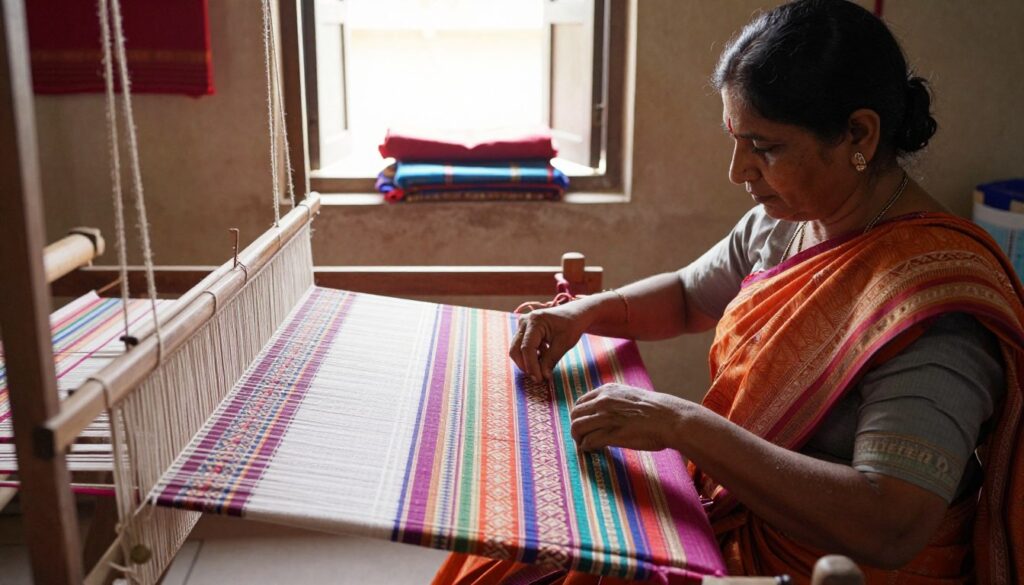
By celebrating and supporting India’s handloom tradition, we preserve a rich cultural heritage. We also promote sustainable and ethical fashion practices.
Understanding the Handwoven Sarees Meaning in Indian Culture
Handwoven sarees are deeply connected to India’s culture and pride. They are more than clothes; they carry tradition, symbolize community, and showcase the country’s rich textile history.
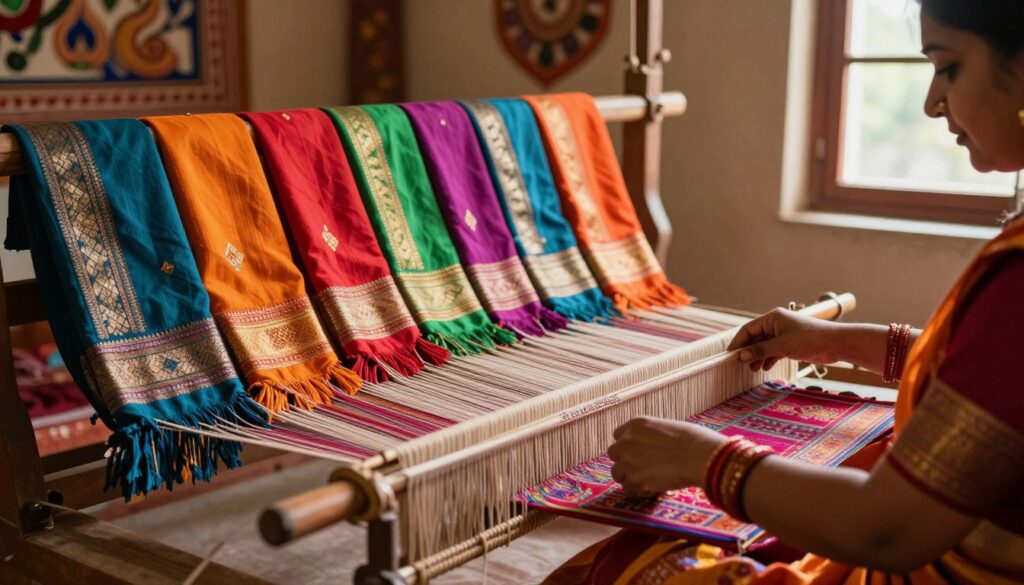
Symbols of Identity and Regional Pride
Handwoven sarees are a big part of India’s culture. Each region has its own special weaving style, patterns, and techniques. These sarees show the weaver’s community and where they come from.
How Weaves Represent Communities
The weave of a saree tells the story of its community. For example, Banarasi sarees show Varanasi’s rich culture. Andhra Pradesh’s weavers are known for their bold Pochampally saree patterns.
Color and Motif Symbolism
Colors and motifs in handwoven sarees have deep meanings. Red means prosperity and good luck. Peacock motifs symbolize beauty and pride. These elements tell stories and convey messages through the fabric.
Ceremonial Significance Across Generations
Handwoven sarees are key in Indian ceremonies and rituals. They pass down traditions from one generation to the next. They are seen as family treasures, valued for their beauty and the memories they hold.
Wedding Traditions and Handloom Sarees
In many Indian cultures, handwoven sarees are a big part of weddings. Brides wear sarees passed down through generations or made for the wedding. This shows the importance of the event and the joining of two families.
Heirloom Sarees as Family Treasures
Handwoven sarees are often kept as family heirlooms. They symbolize the love and care in their making. They are passed down to younger generations, connecting them to their heritage.
Exploring handwoven sarees shows they are more than fabric. They are carriers of culture, tradition, and identity. As one weaver said, “A handwoven saree is a story woven in threads, a legacy that continues to unfold with each passing generation.”
“The art of weaving is not just about creating fabric; it’s about weaving the very fabric of our society.”
Handcrafted vs. Mass-Produced: A World of Difference
Handcrafted sarees from India show a tradition of excellence that mass-produced ones can’t match. The difference is not just in looks but in the skill, time, and effort put into each piece.
The Artisanal Touch: Imperfections as Perfection
Handwoven sarees have unique, subtle flaws that show the artisan’s skill. These flaws are not errors but proof of the human effort in weaving each saree.
Unique Characteristics of Hand-Woven Fabrics
Hand-woven fabrics have a special texture and weave that machines can’t copy. The irregularities in the weave make the fabric unique.
The Beauty in Slight Irregularities
These small flaws are not just pretty; they also tell the story of the weaver’s skill and time spent on each saree.
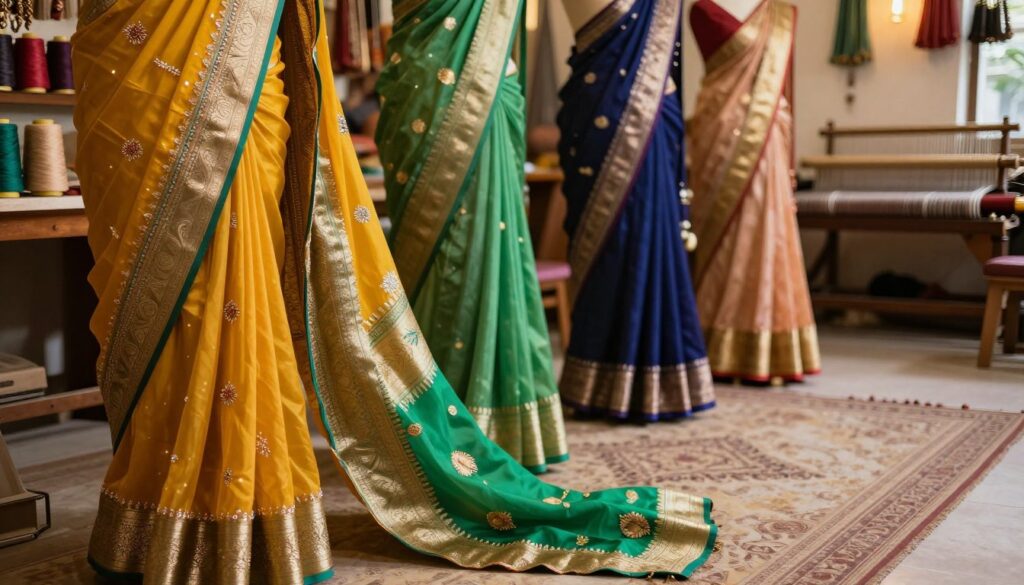
Machine-Made Efficiency vs. Human Creativity
Machine-made sarees are efficient and uniform but lack the creativity and personal touch of a human weaver.
Price Points and Quality Comparisons
Handcrafted sarees cost more because of the hard work involved. But their quality and durability make them a worthwhile investment.
Longevity and Wear Differences
Handcrafted sarees last long, often being passed down through generations. Their fabric quality and weaving ensure they stay beautiful and wearable over time.
| Characteristics | Handcrafted Sarees | Mass-Produced Sarees |
|---|---|---|
| Craftsmanship | Unique, human touch | Machine-made, uniform |
| Quality | High, durable | Variable, often less durable |
| Price | Generally higher | Often lower |
“The loom is a bridge between the past and the present, and handwoven sarees are the tangible links that connect us to our heritage.”
The Artisans Behind the Loom: Custodians of Tradition
Every artisan-made saree is a result of the hard work and skill of weavers. These craftsmen are key to India’s handloom tradition. They bring to life the detailed designs and patterns on our ethical fashion sarees.
Generational Knowledge Transfer
Weaving is a skill passed down through generations. Young ones learn these techniques early. This keeps the traditional methods and designs alive.
Learning the Craft from Childhood
Artisans start learning their craft early, with simple tasks first. They then move to more complex techniques. This early start helps them master the skills needed for detailed designs.
Family Specializations in Weaving
Weaving is often a family affair, with each member specializing in different techniques. This diversity leads to a wide range of designs and patterns.
Challenges Faced by Modern Weavers
Modern weavers face many challenges, including economic pressures and market competition.
Economic Pressures and Market Competition
Artisans face economic struggles due to cheaper, machine-made alternatives. This competition makes it hard for them to make a living.
Government Initiatives for Artisan Support
The government has launched initiatives to help artisans. These include training programs, financial help, and market access. These efforts aim to keep the handloom tradition alive and support the artisans.
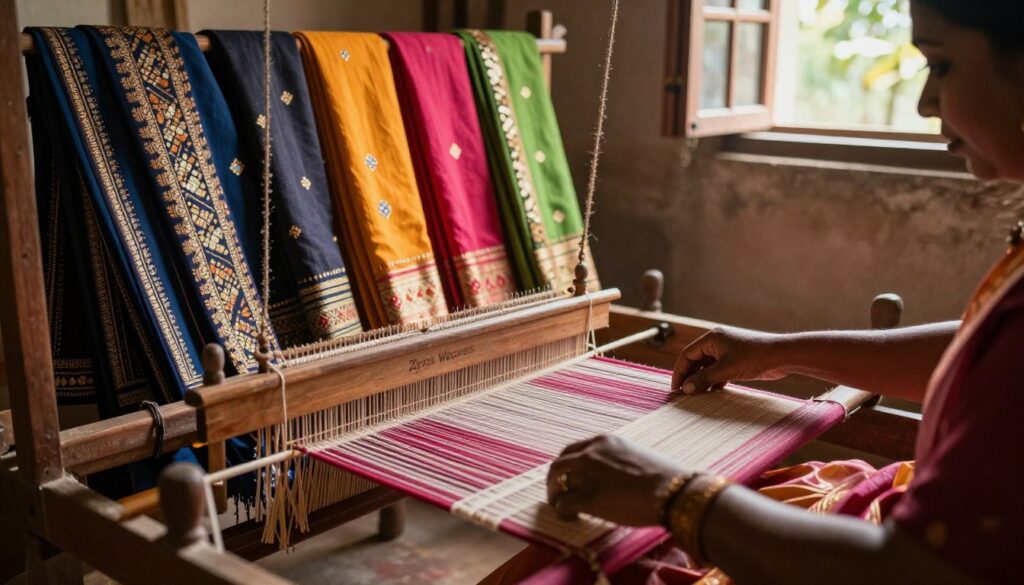
Regional Masterpieces: A Tour of India’s Handwoven Treasures
Exploring India’s handwoven treasures, we find beauty and diversity in each saree. These sarees show the rich cultural heritage of India. They are known for their unique regional characteristics.
Northern Wonders: Banarasi and Chanderi
In the north, Banarasi and Chanderi sarees are highly valued. They are famous for their luxurious fabrics and detailed designs.
Gold Zari Work of Banaras
Banarasi sarees stand out for their gold zari work. This involves weaving with gold threads, making the fabric rich and luxurious.
Lightweight Elegance of Chanderi
Chanderi sarees are known for their lightness and elegance. They have delicate patterns that show the region’s cultural heritage.
Southern Splendors: Kanjeevaram and Pochampally
The south has its own treasures, like Kanjeevaram and Pochampally sarees. These sarees are loved for their bright colors and unique patterns.
Temple Borders of Kanjeevaram
Kanjeevaram sarees are famous for their temple borders. These borders have designs inspired by ancient temples.
Geometric Patterns of Pochampally Ikat
Pochampally sarees are known for their geometric patterns. These patterns are made using the Ikat technique, a traditional resist-dyeing method.
Eastern Elegance: Jamdani and Baluchari
The east is home to Jamdani and Baluchari sarees. They are known for their detailed motifs and narrative designs.
Bengali Jamdani’s Delicate Motifs
Jamdani sarees from Bengal are celebrated for their delicate motifs. These motifs are woven with great care, making the fabric beautiful and detailed.
Narrative Pallu Designs of Baluchari
Baluchari sarees are known for their narrative pallu designs. These designs often tell stories from mythology and everyday life, adding a unique element to these handwoven pieces.
Traditional Weaving Techniques That Define Handcrafted Sarees
Traditional weaving techniques are key to handcrafted sarees, making them special. These methods have been passed down for generations. They show the skill and craftsmanship of Indian weavers.
The Intricate Art of Jacquard and Jamdani
Jacquard and Jamdani weaving are famous for their detailed designs and complex patterns. These methods use pattern creation without modern technology. They rely on the weaver’s skill and experience.
Pattern Creation Without Modern Technology
Creating detailed patterns without modern machines is hard and takes a lot of time. Weavers plan and execute each thread carefully to get the right design.
Time Investment in Complex Designs
Creating complex Jacquard and Jamdani designs takes a lot of time. Each saree can take days or weeks to make, depending on the pattern’s complexity.
Ikat and Tie-Dye: Precision in Pattern-Making
Ikat and tie-dye are traditional techniques used in handcrafted sarees. These methods use pre-loom dyeing techniques that need great precision to get the right patterns.
Pre-Loom Dyeing Techniques
In Ikat and tie-dye, threads are dyed before being woven into fabric. This process needs careful planning to make sure the patterns match when the fabric is woven.
Regional Variations in Resist-Dyeing
Different parts of India have their own unique resist-dyeing techniques. For example, the Pochampally Ikat from Andhra Pradesh is known for its unique geometric patterns.
| Weaving Technique | Characteristics | Region |
|---|---|---|
| Jacquard | Intricate designs, complex patterns | Various |
| Jamdani | Delicate patterns, supplementary weft technique | Bengal |
| Ikat | Resist-dyeing, geometric patterns | Andhra Pradesh, Telangana |
| Tie-Dye | Resist-dyeing, varied patterns | Rajasthan, Gujarat |
The Importance of Handwoven Sarees in Slow Fashion Movement
Handwoven sarees are key in the slow fashion movement. They stand for sustainability and ethical making. These traditional clothes are not just old-fashioned items. They are leading the way to a more mindful and responsible fashion world.
Sustainability and Ethical Production
Handwoven sarees use old techniques that focus on natural materials and methods. This is different from fast fashion, which harms the environment and treats workers poorly.
Natural Dyes and Eco-Friendly Processes
Natural dyes from plants and minerals make each saree unique. They also help the environment. This eco-friendly approach is a big part of the handloom sector’s success.
Fair Trade Practices in Handloom Sector
Fair trade means artisans get paid well for their work. This helps local economies and keeps traditional crafts alive. It makes the fashion world more fair and just.
Reducing Carbon Footprint Through Traditional Practices
Handloom weaving uses little energy, unlike modern textile making. It also uses materials that break down naturally and makes little waste. This makes handwoven sarees good for the planet.
Low Energy Consumption of Handlooms
Handlooms need very little energy because they are mostly manual. This old way of weaving is not only green but also saves energy.
Biodegradable Materials and Minimal Waste
Handwoven sarees are made from natural fibers and dyes, so they can easily decompose. The weaving process also creates very little waste. This makes them a sustainable choice.
| Aspect | Handwoven Sarees | Fast Fashion |
|---|---|---|
| Production Method | Manual, Traditional | Mechanized, Mass Production |
| Materials | Natural Fibers, Natural Dyes | Synthetic Fibers, Chemical Dyes |
| Energy Consumption | Low | High |
| Waste Generation | Minimal | Significant |
Investing in Artisan-Made Sarees: Value Beyond Price Tags
Buying artisan-made sarees is more than just getting clothes. It’s like getting a piece of art that shows our cultural roots. These sarees are made with care, love, and skills passed down for ages.
Heirlooms in the Making: Longevity and Appreciation
Artisan-made sarees are more than clothes; they’re future heirlooms. With the right care, they can last for years and even grow in value.
Care Techniques for Preserving Handwoven Sarees
To keep handwoven sarees looking great, wash them gently, store them well, and stay away from harsh chemicals.
Financial Appreciation of Vintage Handlooms
Vintage handlooms, with their unique designs or historical value, can increase in worth. They become a prized possession for collectors.
Supporting Livelihoods and Preserving Skills
Buying artisan-made sarees helps weavers and their families. It keeps this ancient craft alive.
Direct Impact on Weaver Communities
Buying handwoven sarees helps artisans. It lets them keep their craft alive and support their communities.
Cultural Preservation Through Patronage
Supporting artisan-made sarees helps keep traditional weaving alive. It ensures these traditions are shared with future generations.
Styling Handwoven Sarees for Modern Occasions
Handwoven sarees are perfect for modern outfits. They have rich textures and vibrant colors. We can style them in many ways to fit today’s fashion while keeping their traditional charm.
Contemporary Adaptations of Traditional Drapes
Wearing handwoven sarees lets us mix old with new. This mix brings new life to classic designs. It also makes them great for different events.
Fusion Styling for Everyday Wear
For casual days, handwoven sarees can be dressed down. Try pairing a light saree with a modern t-shirt or a trendy crop top. This creates a cool, easy look.
Office-Friendly Handloom Ensembles
At work, handwoven sarees look elegant with a tailored blouse and simple accessories. Choose soft colors and patterns for a professional vibe.
Accessorizing to Enhance Handloom Beauty
Accessories are key to making handwoven sarees stand out. The right jewelry, blouse, or bag can make your look more modern and chic.
Jewelry Pairings for Different Weaves
The weave of a saree guides jewelry choices. A detailed saree needs simple jewelry, while a plain one can handle bold pieces.
Modern Blouse Designs for Traditional Sarees
New blouse designs can update traditional sarees. Try different necklines, sleeves, and fabrics for a fresh look.
| Saree Type | Recommended Accessories | Occasion |
|---|---|---|
| Heavy Embroidered | Simple jewelry, classic clutch | Wedding, Formal Event |
| Plain Weave | Statement jewelry, modern bag | Casual Gathering, Office |
| Striped or Checked | Minimal jewelry, elegant shawl | Party, Semi-Formal |
Conclusion: Wearing Stories, Preserving Legacies
Handwoven sarees are more than just clothes; they carry our cultural heritage. They keep alive the stories, skills, and histories of our ancestors. This makes them a key part of India’s identity.
Supporting slow fashion in India helps artisans and promotes a green fashion industry. Each saree’s unique patterns and colors show the creativity and skill of Indian weavers.
We must keep valuing these traditional crafts. Doing so helps preserve India’s textile heritage and supports the artisans. Let’s wear these handwoven treasures with pride and pass them on to our children.
